
06/12/2019
One more morning in the Drake passage… the swell was 5-6 meters, winds were 8 beaufort, with occasional fog. The conditions for visual observations were not great… preventing us from doing whale identification training as there was nothing to detect… well there was… but everything was hidden and camouflaged behind the fog and the white caps. This is why it is important to keep updated records on sightability and visibility conditions. This will inform the model during the later analysis, by telling the model that your ability to detect animals was low and not that the whales were not there. Visibility (how far you can see) and sightability (the ability to detect a sighting) are important factors that affect your ability to make a visual detection…hence to make inferences about the amount of animals using in the area, similarly to the ambient noise levels for acoustic detections. Though, seabirds were in abundance… Albatrosses and cape petrels were gliding in the strong winds… a flock of cape petrels were following along the side of the boat…
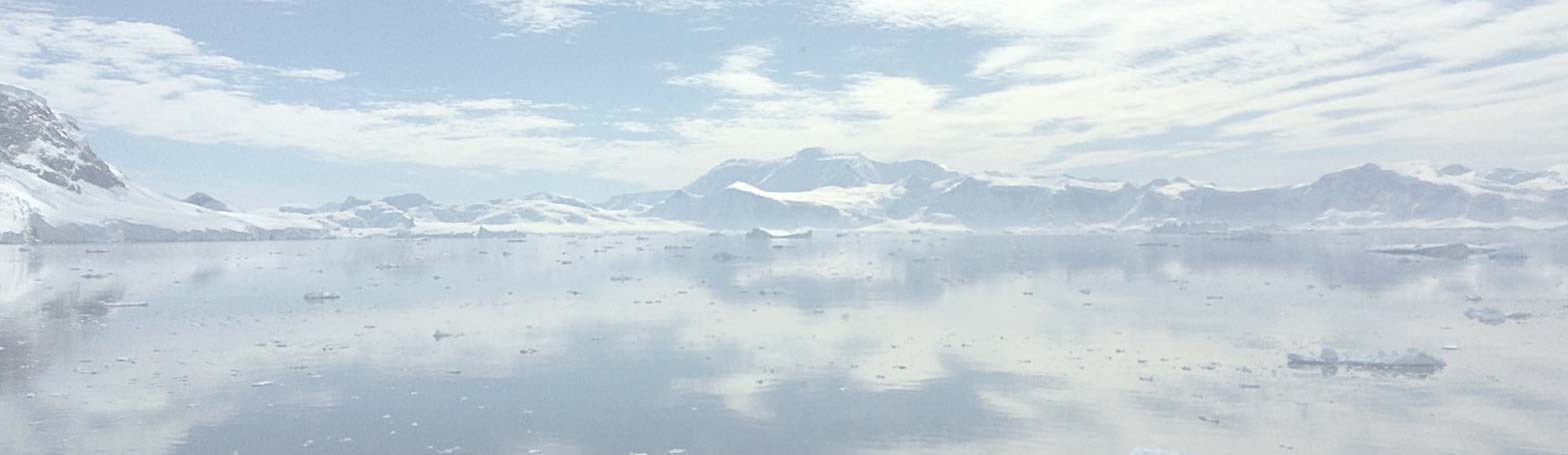
One more crew member in the bridge… looking for signs of the first ice as we slowly travelled south. Suddenly … after a few hours… here it is… far away in the distance… like a huge frozen wave… like a mountain… a white one… the tip was visible above the distant haze of the horizon… yes we were heading south for sure. Well, we could have been sailing north as well but our captain was not trying to hide the ship’s destination – as Amundsen had done on his expedition to the South Pole in 1910 – where he let his crew believe his initial plan for an expedition in the Artic, only to let them know the truth when they landed in Madeira, their last opportunity to head back home or continue for an unknown period towards south Pole.
A few more miles travelled … and a few more small icebergs appeared and seen… like pawns in a chess game… playing against invaders of their territory. The South Shetland Islands (Nelson Island, Livingston Island, King George Island and other) in the front line feel like gate keepers of the magic hidden world, a secret from reality.
Catabatic winds, the Chief Engineer was trying to tell me in norwegian (KATABATISKE WINDER in Norwegian and a Greek root as I realized a bit afterwards… καταβατικος), are blowing at the moment from the direction of the gate keepers… the warm weather which was in the area the last few days… combined with the frozen land of the islands pushes the winds down and away from the land towards the north … where we’re coming from. Is this another sign for us to turn away …? Or another reason to go against the wind and see what is hidden behind? A couple of humpback whale blows coming from two different directions … convinced us that we should do the latter… go against the winds and find out what the gate keepers are guarding.
Our first landing is in Half Moon Island (between Livinston and Greenwhich Island). This small island has been defined as an important Bird Area (IBA). We saw skuas, Antarctic shags, terns, kelp gulls and a colony of chinstrap penguins, with only one macaroni penguin, trying to camouflage itself among the rest – his name, apparently, is Elvis. The expedition guides have seen him here for a few
years now.
The sound of the water hitting the shore combines with the vocalizations of the penguins creates a soundtrack to watch the impressive glaciers on the island across. Time to head back to ship
Written by Popi, 6th December 2019